
Program area 2 of 3
Core leadership skills
These are the everyday skills that determine whether people want to work for a manager: how feedback is given, how work is handed over and then left alone, how the awkward matter is raised. The modules are short and practical, and every participant leaves having rehearsed the conversation they have been postponing.

Essential
Coaching Skills for Managers
When a manager answers every question, the team stops thinking and the manager runs out of hours. Participants practice the alternative on real people from their own teams, and each one rehearses a conversation they have been avoiding.
Essential
Situational Leadership
There is no single right way to lead a person. Participants identify the style they default to, what it costs them under pressure, and how to match their approach to how ready a particular person is for a particular task. Includes a self-assessment and a practice lab.
Essential
Delegation
Delegation fails when the task is handed over and the authority is not. Participants learn to separate giving a task, giving the right to act and giving a class of decisions.
Essential
Negotiation Skills
Most negotiations are lost in the preparation, not at the table. Participants bring live negotiations, internal or external, and work them rather than a case study.
Essential
Persuasion and Influence
Cross-functional work runs on influence. Participants separate persuading from negotiating, work out what actually moves a stakeholder, and apply it to a live ask they are currently carrying.
Essential
Time Management and Prioritisation
Leaders rarely have a time problem. They have a priorities problem, and the calendar proves it. Participants audit last week honestly and decide what changes in the next one.
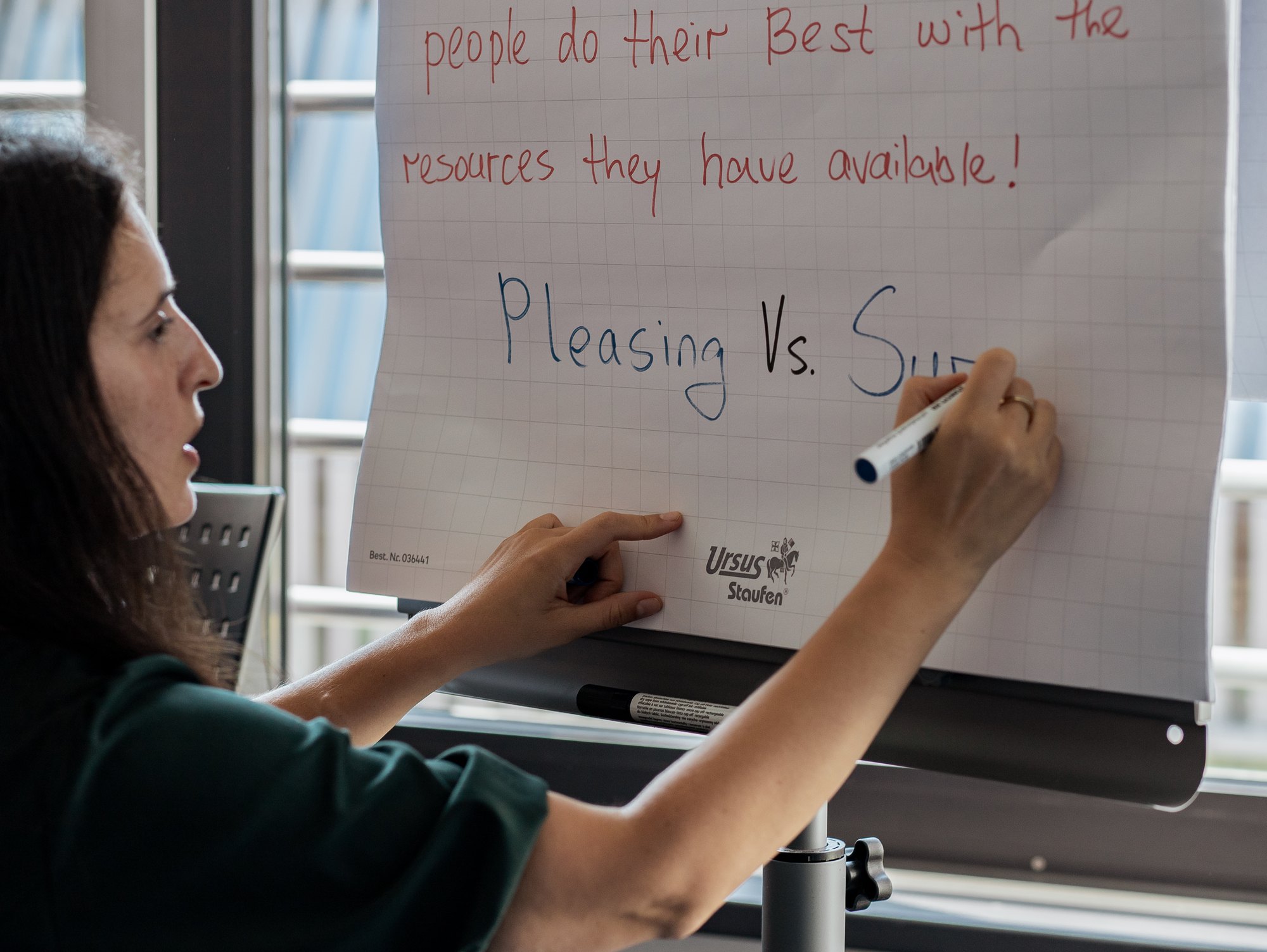
The practical part
Questions people ask
Can we begin with a single module?
Yes. Several of them work well as a single half day, and that is how many organizations start.
How much theory is involved?
Only as much as the practice requires, and the source of every model is stated rather than presented as my own.
Our managers consider this already familiar.
Most of them are right. The more interesting question is what prevents the practice from following the knowledge, and that conversation is short, mildly uncomfortable, and usually the most valuable part of the day. Handling it well is where the coaching background matters.
A series built for one group
Name the group and what should be different in six months. You will receive a proposal of three modules and the order in which I would run them.