
Programs
Leadership development programs
More than thirty programs, grouped into three areas. All of them originate in situations that managers brought to me over the last eleven years, and none of them is a lecture: participants work on their own cases, with me and with one another.

Leadership transitions
Three programs for the points at which the role itself changes. Built on the Leadership Pipeline model.
Core leadership skills
Seven modules on the everyday craft of leading people, each one practiced on situations participants bring.
The Change Cycle
Six modules, from the first encounter with change through to shaping culture deliberately.
What is inside each area
Three levels, and what they mean
The level reflects the ground a group has already covered rather than seniority. A director in the first month of a major change belongs in Essential, and no one in the room takes issue with that.
Builds the foundation and assumes no prior work
For experienced leaders, worked on their own live cases
Works at the level of the system rather than the individual leader
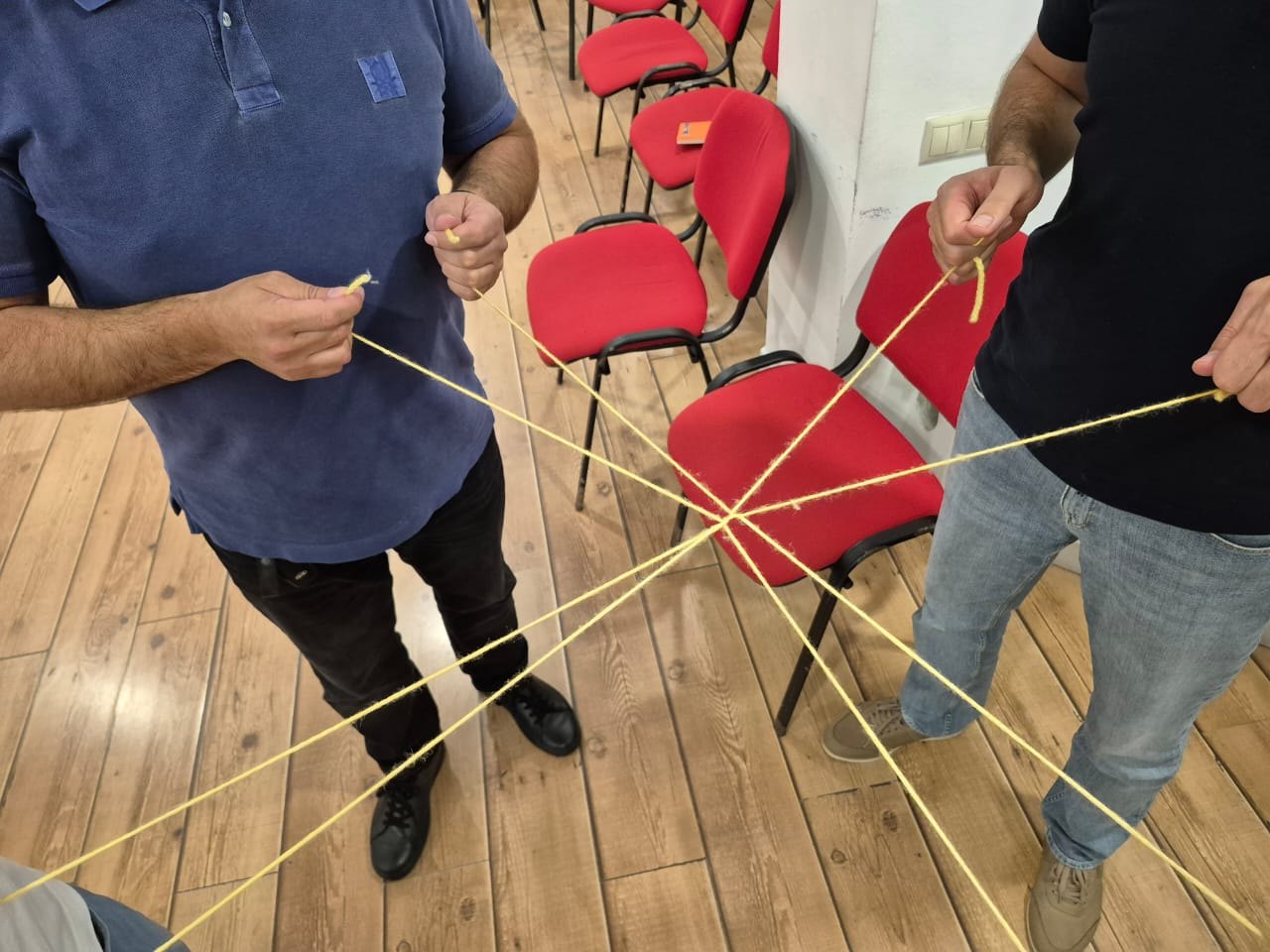
Design begins with what is already true
Programs designed on assumption rather than on evidence rarely produce the change intended, and three straightforward instruments make the assumption unnecessary. A six-minute self-check gives every manager an individual picture and shows how the group stands as a whole. A properly run 360 establishes what your leaders can already do and where the constraint sits, accompanied by an explicit account of the limits of the numbers. And where company values are written in language that has not yet been translated into everyday action, that is worth addressing first: a principle that cannot be described as behavior cannot be developed.
The practical part
Questions people ask
Can programs from different areas be combined?
Yes, and most organizations do exactly that. A common first year combines one program for a particular group with one round of measurement, so that the following year is planned on findings rather than on impressions.
Is this only for whole organizations?
Two of the programs run as open cohorts that an individual manager can join. Everything else is delivered inside a single organization, for its own people.
Could our own trainers deliver it later?
Yes. The full facilitator guide, with timings and materials, can be written and handed over to your team, and several organizations have taken that route.
The full catalogue
More than thirty programs, with formats, what each one produces and the sources the methods draw on. It is sent as a PDF. Where a conversation would be more useful than a document, that is equally available.