
Program area 1 of 3
Leadership transitions
A promotion changes the role completely, although organizations commonly treat the new position as a larger version of the previous one. Someone rewarded for excellent individual work now has to produce results through other people, and the habits that earned the promotion are frequently the ones that get in the way. The pattern is the same whether you are making the move yourself or you are responsible for managers who are.
Essential
Your First Team
The first promotion is the hardest one. New managers stop doing the work they were promoted for and start getting results through other people: handing work over, giving feedback to a former peer, and deciding when to step in and when to stay out.
Advanced
Leading Through Leaders
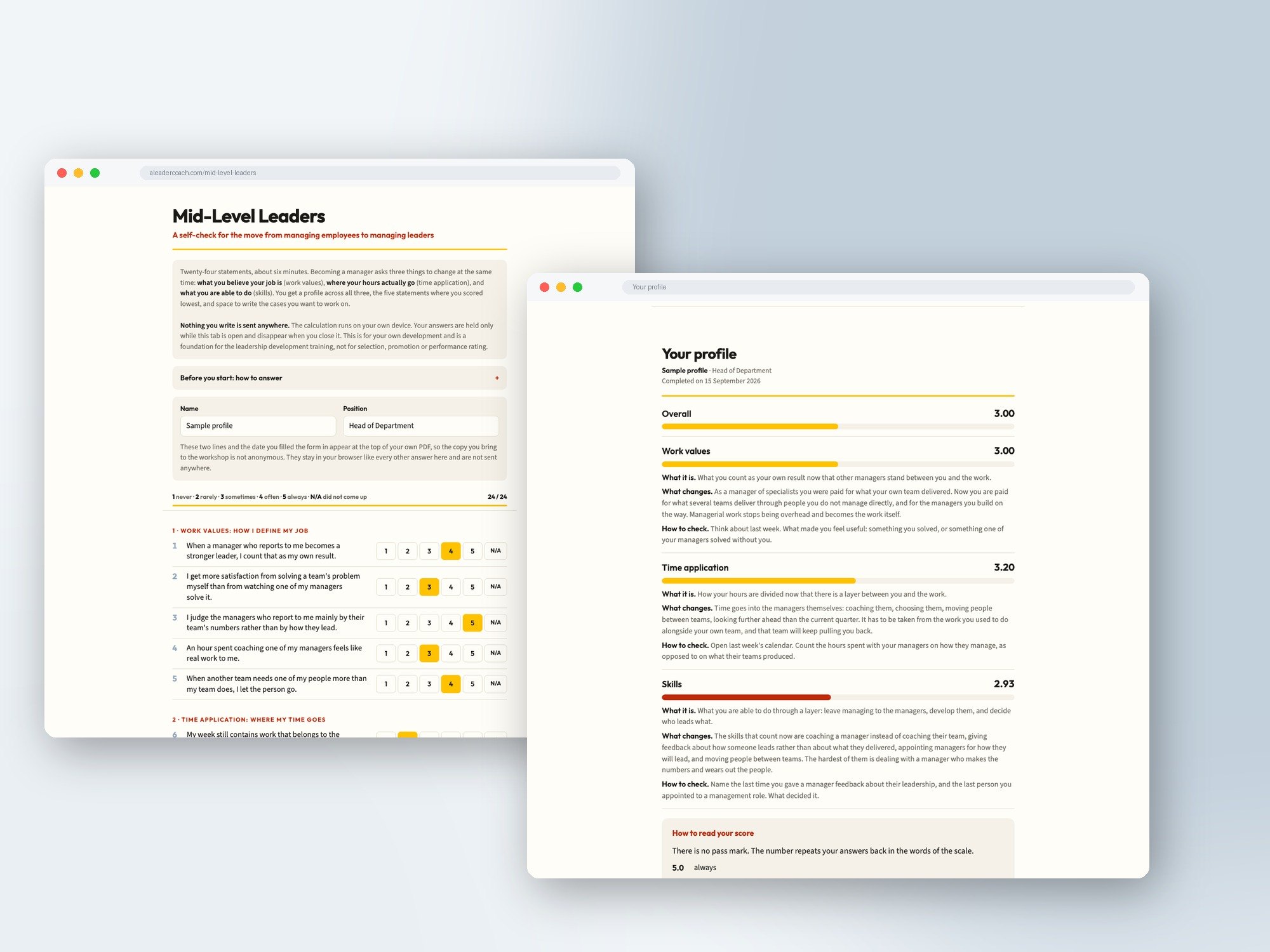
Leading specialists and leading managers are two different jobs, and most people are promoted into the second one carrying the habits of the first. Participants work out what has to change in what they count as their own result, where their hours go and what they can do through a layer.
Advanced
Leading the Whole Function
At this level the work stops being about your own area and starts being about everything around it. Leaders look honestly at where their time goes, who they need to influence and what their role has to deliver two years out rather than this quarter.
Where this comes from
The foundation is the Leadership Pipeline, the model developed by Charan, Drotter and Noel, which holds that every step up requires three changes: what counts as your own success, where your hours go, and which capabilities the role now demands. The exercises, the self-checks and the way the days are structured are my own, developed over years of running this with real groups.
The practical part
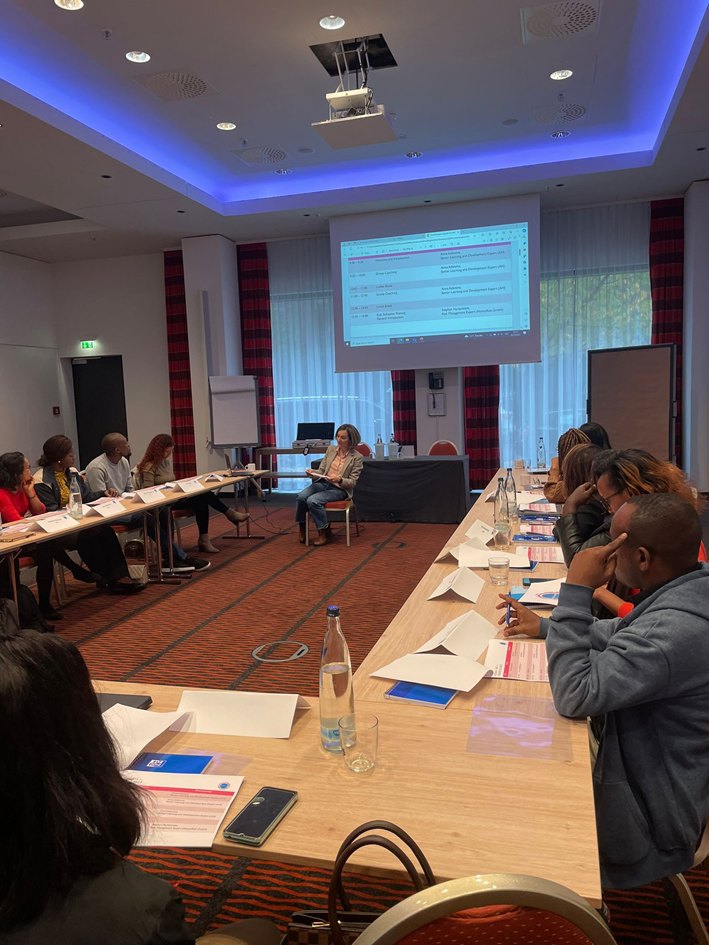
I found the class valuable because it gave me the opportunity for quality reflection, and I have learned more about myself and my direct reports.
Questions people ask
Our managers were promoted years ago. Is it too late?
Rarely. An unfinished transition is frequently carried for years and described as being hands-on. The self-check tends to make it visible within six minutes, at which point it can finally be discussed openly.
How does this differ from a general leadership course?
It addresses one specific change, the one the people in the room are living through at that moment, which is why participants recognize themselves in almost every example.
Can different levels be combined in one group?
Yes. Each participant works on their own step, and hearing what the level above is dealing with tends to help rather than distract.
Not sure where your managers stand?
The free self-check takes six minutes. Every manager receives an individual picture, and the group gains a shared starting point before anything else is discussed.