Most organisations promote people based on one assumption: if you’re good at your current role, you’ll be good at the next one too. It feels logical. It’s also one of the most expensive mistakes a business can make.
The Leadership Pipeline model — developed by Ram Charan, Stephen Drotter, and Jim Noel — offers a different way of thinking about leadership growth. Instead of treating leadership as a single skill that simply gets “more senior” over time, it maps leadership as a series of distinct passages. Each transition requires a leader to let go of what made them successful before and build something genuinely new in its place.
I use this model as the backbone of most of my leadership development work, because it does something few frameworks do well: it names the exact place where good people quietly get stuck.
The Core Idea: Transition, Not Promotions
A promotion changes the title. A transition changes a person.
At every level of the pipeline, three things have to shift:
– Skills — the new capabilities the role demands
– Time application — how a leader’s calendar and attention need to be redistributed
– Work values — what a leader has to genuinely believe matters, not just say matters
The mistake most organisations make is promoting on skill alone, and hoping time application and values will follow naturally. They rarely do. A leader can have all the right skills on paper and still fail, because their calendar and their instincts haven’t caught up with their new title.
The Five Transitions
1. Leading Self → Leading Others
This is the first and often most underestimated transition. A high-performing individual contributor becomes a manager — and has to stop being the best doer on the team. The shift is from personal output to enabling other people’s output: delegating, coaching, and getting comfortable that success is now measured by what the team achieves, not what the leader personally produces.
2. Leading Others → Leading Leaders
This is where things get genuinely difficult. A manager who leads individual contributors now has to lead other managers. The leader’s job stops being “solve the problem” and becomes “build the person who solves the problem.” This means coaching leadership, not tasks; selecting and developing other managers well; and — often the hardest part — holding other leaders accountable rather than quietly doing their job for them when things get hard.
3. Leading Leaders → Functional Leader
Here, a leader takes ownership of an entire function — not just a team of teams, but the strategic direction, reputation, and long-term capability of a whole discipline within the business. The shift is from managing what’s inside the function to representing that function credibly across the organisation and connecting its work to company strategy rather than just departmental performance.
4. Functional Leader → Business Leader
This transition moves a leader from owning one function to owning a full business or business unit — profit, multiple functions, and the integration of specialists who don’t naturally think the way each other does. The leader now has to balance competing functional interests (sales wants one thing, operations wants another) and make calls that serve the whole business, not just the function they came from.
5. Business Leader → Enterprise Leader
Now the leader is responsible for the success of other business leaders, not a single business. The shift is subtle but significant: value creation no longer comes from running a business well — it comes from judging the health and strategy of businesses run by others, and allocating resources and capital across them.
At the top of the pipeline, the leader is now accountable for the whole enterprise: setting a long-term vision, managing a portfolio of businesses, and building an organisation that can outlast any single leader’s tenure — including their own.
Where Leaders Actually Get Stuck
In practice, most of the leaders I work with are navigating one of two passages: Leading Others → Leading Leaders, or Leading Leaders → Leading Function These are the passages where technical excellence stops being enough, and where the shift required is less about acquiring a new skill and more about giving something up.
The pattern is remarkably consistent across industries and geographies:
- A leader keeps doing the work that made them successful before, instead of building the people who should now be doing it.
- A leader coaches the *task* in front of them, rather than coaching the *person* they’re developing.
- A leader avoids the hard conversation about a manager who isn’t performing at the level the transition requires — because it feels easier to work around a weak manager than to address them directly.
- A leader’s calendar tells a different story than their stated priorities. They say development matters. Their time says otherwise.
None of these are failures of intelligence or effort. They’re failures of transition — and transitions have to be built deliberately. They rarely happen just because someone has “enough experience.”
Why This Matters for Organisations, Not Just Individuals
Every unmanaged pipeline transition has a cost that extends beyond one person’s performance. A Leader of Leaders who can’t let go of hands-on problem-solving creates a bottleneck for every manager beneath them. A Functional Leader who can’t think beyond their own department slows down cross-functional strategy for the whole business. The further up the pipeline the gap sits, the more people it quietly affects.
This is why I don’t treat leadership development as a single generic skill-building exercise. Effective development has to be pinned to the specific transition a leader is actually navigating — because the skills, time shifts, and value shifts required at each level are genuinely different from one another.
How This Shows Up in My Work
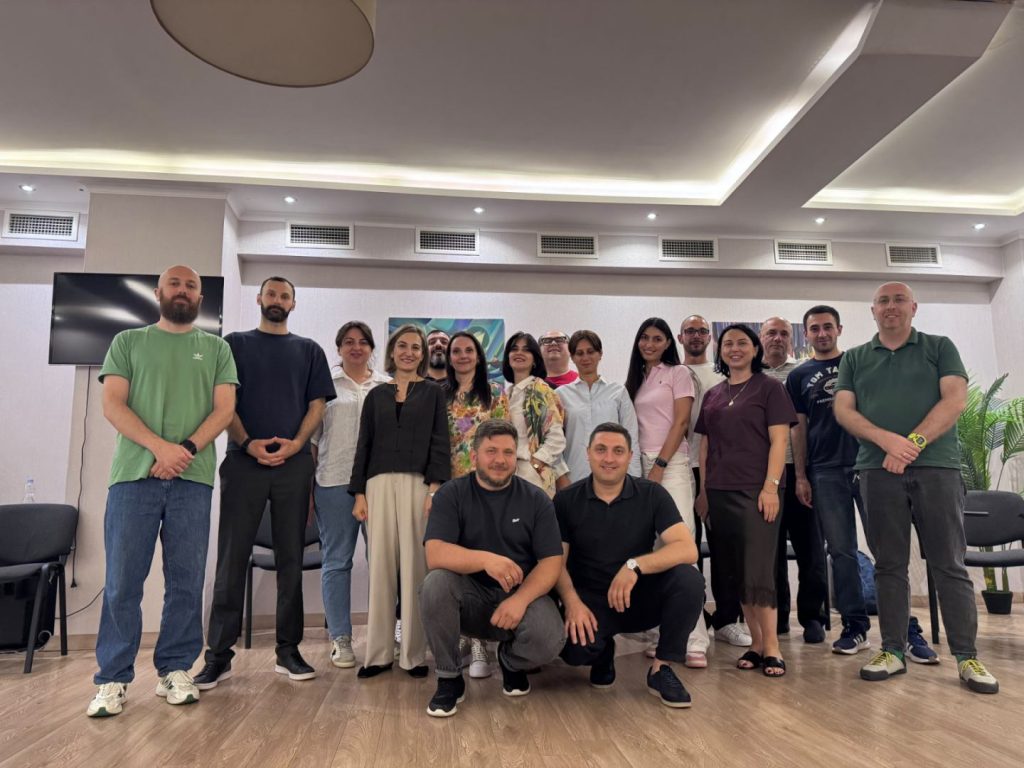
When I design a leadership programme — whether for a single cohort of department heads or a multi-year development pipeline — I start by identifying exactly which transition the group is navigating, and build the entire programme around the real, specific shifts that transition demands. Not generic leadership theory, but the actual skills, time reallocation, and values shift required at that level — worked through using real cases from participants’ own desks, not hypothetical scenarios.
This is also where coaching becomes essential, not optional. A framework can tell a leader what needs to change. Coaching is what helps a leader actually see where they personally still are versus where the transition requires them to be and start making a different choice in real situations, not just in theory.
If you’re noticing this kind of gap in your own organization, leaders who look ready on paper but are struggling with the shift a promotion actually demands, it’s usually a sign that the pipeline transition itself needs deliberate attention, not just more experience or more time.